The soundscape of a healthy ecosystem is nature’s own orchestra, and scientists are learning to listen. Bioacoustics is revolutionizing how we measure ecological restoration success.

🎵 Why Sound Matters More Than You Think
When we think about measuring environmental restoration, images of vegetation surveys, water quality tests, and species counts typically come to mind. But there’s another dimension of ecosystem health that’s been hiding in plain sight—or rather, in plain sound. The acoustic environment of a landscape tells a remarkably complete story about its ecological condition, biodiversity, and functional integrity.
Bioacoustics, the scientific study of sounds produced by living organisms, has emerged as a powerful tool for conservation and restoration monitoring. Unlike traditional survey methods that require extensive time in the field and specialized taxonomic expertise, acoustic monitoring can capture data continuously, non-invasively, and across multiple species groups simultaneously.
The principle is elegantly simple: healthy ecosystems are sonically rich and diverse. From the dawn chorus of birds to the evening symphony of frogs and insects, the acoustic signature of a landscape reflects its biological complexity. As restoration progresses, this acoustic richness should theoretically increase, providing a measurable indicator of ecological recovery.
The Science Behind Nature’s Symphony
Every ecosystem has its unique acoustic fingerprint. In tropical rainforests, the soundscape layers include the low-frequency rumbles of large mammals, mid-frequency bird calls, and high-frequency insect buzzes. Coral reefs create underwater soundscapes filled with fish vocalizations, snapping shrimp, and the grinding of coral growth. Even grasslands have distinctive acoustic profiles shaped by wind patterns, grasshoppers, and specialized grassland birds.
These sounds don’t just exist randomly—they follow patterns. Scientists have identified several key acoustic indices that correlate with ecosystem health:
- Acoustic Diversity Index (ADI): Measures the variety of sounds across different frequency bands
- Acoustic Complexity Index (ACI): Quantifies the variability of sound intensity over time
- Bioacoustic Index (BI): Focuses specifically on the area of the spectrogram occupied by biological sounds
- Acoustic Evenness Index (AEI): Assesses how evenly sound energy is distributed across frequencies
These indices transform subjective acoustic experiences into objective, quantifiable data that can track restoration progress over time. When a degraded forest begins to recover, its acoustic complexity typically increases as more species return and ecosystem functions resume.
From Silent Springs to Singing Forests 🌳
Rachel Carson’s “Silent Spring” warned of a world without birdsong—a prophetic vision of ecological collapse. Restoration projects aim to reverse this trajectory, and bioacoustics provides a direct measure of success. When recorded sounds reveal increasing vocal activity, species richness, and acoustic complexity, we know that life is returning.
Consider a degraded tropical forest undergoing restoration. In early stages, recordings might capture only wind and sparse insect sounds. As native vegetation returns and provides food and habitat, bird calls begin to appear. Pioneer species arrive first, followed gradually by more specialized forest interior species. Frogs return as water cycles stabilize. Eventually, the full complement of vocalizing species creates a rich soundscape that approaches reference conditions in mature forests.
This acoustic trajectory isn’t just poetic—it’s measurable and scientifically robust. Researchers can compare soundscapes from degraded, restoring, and reference sites to assess how closely a restoration project is achieving its goals.
Technology Amplifying Conservation Impact
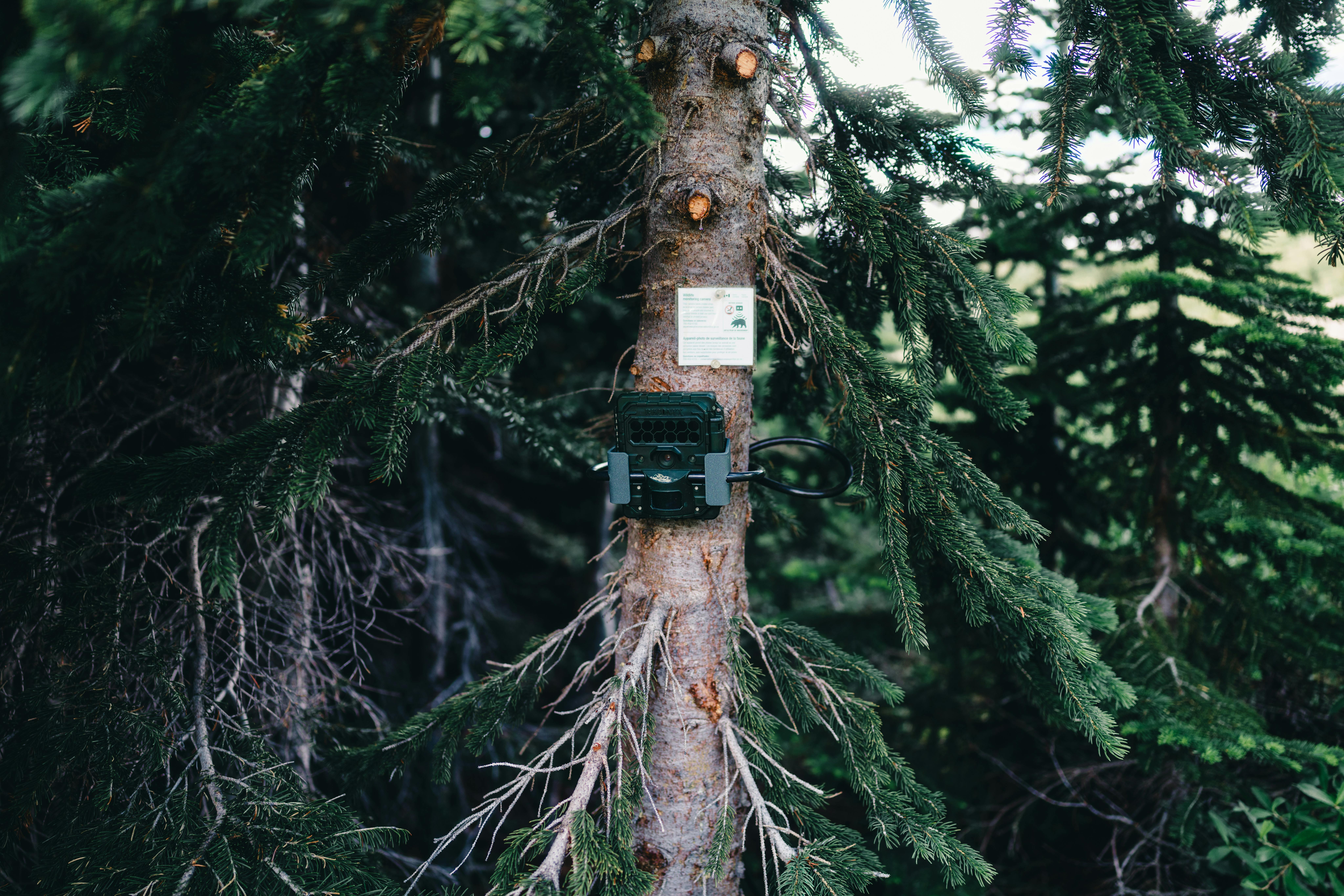
Modern bioacoustics relies on sophisticated technology that would have seemed like science fiction just decades ago. Autonomous recording units (ARUs) can now be deployed in remote locations for months at a time, capturing continuous audio data with minimal human presence. These weatherproof devices record on preset schedules, storing thousands of hours of environmental sounds on memory cards.
The real magic happens in data processing. Machine learning algorithms can now automatically identify species-specific calls, filter out wind and rain noise, and calculate acoustic indices across massive datasets. What once required hundreds of hours of manual analysis by expert listeners can now be accomplished in a fraction of the time.
Several mobile applications have made bioacoustic monitoring accessible to citizen scientists and restoration practitioners. Tools like BirdNET allow users to record and automatically identify bird species by their songs and calls, contributing to large-scale biodiversity databases while learning about local species.
This democratization of acoustic monitoring means that restoration projects of all scales—from backyard rewilding to large landscape initiatives—can incorporate bioacoustic assessment into their monitoring protocols.
Real-World Success Stories 🎧
Across the globe, bioacoustics is proving its value in restoration monitoring. In Australia’s fragmented woodlands, researchers used acoustic monitoring to track the recovery of bird communities following replanting efforts. They discovered that acoustic complexity returned faster than expected in some sites, revealing that even small patches of restored habitat could support surprisingly rich communities when connected to larger forest fragments.
In the Amazon, bioacoustic studies of forest regeneration have revealed that secondary forests can achieve acoustic complexity comparable to old-growth forests within 20-40 years for some taxonomic groups, though full recovery of specialist species may take longer. This finding has important implications for restoration targets and expectations.
Coral reef restoration projects are using underwater acoustic monitoring to track recovery. Healthy reefs are surprisingly noisy places, and the return of fish populations and invertebrate activity creates measurable increases in underwater soundscape complexity. Researchers have even experimented with playing healthy reef sounds through underwater speakers to attract fish larvae to restoration sites—a technique dubbed “acoustic enrichment.”
Challenges in Interpreting Nature’s Language
Despite its promise, bioacoustic monitoring isn’t without challenges. Interpretation requires understanding what you’re measuring and why. Not all sounds indicate positive restoration outcomes—invasive species vocalize too, and sometimes prolifically. A soundscape dominated by introduced species might score high on acoustic indices but represent ecological failure.
Temporal variation also complicates interpretation. Soundscapes change dramatically with time of day, season, weather, and even lunar cycles. A single recording session might miss key species or capture unrepresentative conditions. Robust bioacoustic monitoring requires sampling across these temporal dimensions.
Background noise from human activities—traffic, machinery, aircraft—can mask biological sounds and inflate certain acoustic indices. Urban and suburban restoration sites face particular challenges in acoustic monitoring, requiring careful protocol design and data interpretation.
Integrating Sound with Other Metrics 📊
Bioacoustics is most powerful when integrated with traditional monitoring approaches rather than replacing them. Visual surveys provide species identifications and population estimates that acoustic data alone cannot. Vegetation surveys reveal structural complexity that supports acoustic diversity. Water quality measurements explain patterns in aquatic soundscapes.
A comprehensive restoration monitoring program might look something like this:
| Monitoring Component | Frequency | Key Information |
|---|---|---|
| Acoustic Recording | Continuous or scheduled | Overall biodiversity, ecosystem function, temporal patterns |
| Visual Surveys | Seasonal | Species composition, population estimates, behavior |
| Vegetation Monitoring | Annual | Habitat structure, native/invasive ratios, succession |
| Environmental Sensors | Continuous | Temperature, humidity, water levels, light |
This integrated approach provides multiple lines of evidence about restoration success, with acoustic data offering unique insights into ecosystem function and community composition.
The Future Sounds Promising 🚀
Emerging technologies promise to make bioacoustic monitoring even more powerful. Artificial intelligence is becoming increasingly sophisticated at identifying not just species, but behaviors, stress calls, and subtle acoustic indicators of ecosystem change. Edge computing allows real-time analysis in the field, potentially enabling adaptive management responses to acoustic data.
Networked arrays of acoustic sensors can map soundscapes across entire landscapes, revealing how acoustic biodiversity varies with habitat type, disturbance history, and restoration interventions. This landscape-scale perspective helps identify core habitat areas, dispersal corridors, and restoration priorities.
Researchers are also exploring multi-sensory monitoring systems that combine acoustics with camera traps, environmental sensors, and even eDNA sampling. These integrated systems provide unprecedented detail about ecosystem recovery processes.
Practical Implementation for Restoration Projects
For practitioners looking to incorporate bioacoustics into restoration monitoring, the path forward is increasingly accessible. Start by defining clear objectives—what do you want the acoustic data to tell you? Are you tracking overall biodiversity recovery, monitoring for specific target species, or assessing habitat quality?
Equipment selection depends on project scale and budget. High-end autonomous recording units offer superior audio quality and durability for long-term deployments, while smartphone-based recording can work for smaller projects or preliminary assessments. Consider recording schedules that capture daily and seasonal variation—even sampling just the dawn chorus and evening activity periods can provide valuable data.
Establish baseline recordings before restoration begins if possible, and identify reference sites that represent your restoration targets. Regular, consistent recording protocols allow robust before-after and treatment-control comparisons.
Data analysis can start simple—even listening to recordings and noting subjective impressions of acoustic richness provides useful information. As capacity grows, incorporate quantitative acoustic indices and automated species identification.
Beyond Numbers: Connecting People to Place 🌍
Perhaps the most underappreciated benefit of bioacoustic monitoring is its ability to connect people emotionally to restoration outcomes. Recordings make invisible progress audible. Stakeholders, funders, and community members can hear the difference between degraded and restored sites in ways that vegetation plots and species lists never quite convey.
Soundscape recordings create powerful before-and-after narratives. The transformation from sparse, quiet recordings to rich, layered soundscapes tells a compelling story of ecological recovery. Some projects create public listening stations or online sound libraries, allowing people to experience restoration success through their own ears.
This emotional connection translates to stronger community support for conservation and restoration efforts. When people can hear nature returning, they become invested in its continued protection and recovery.
Listening to Tomorrow’s Ecosystems Today
As we face unprecedented environmental challenges, bioacoustics offers hope grounded in science. It provides objective measures of restoration success while reminding us that ecosystems are living, dynamic communities—not just collections of species or ecosystem services metrics.
The return of acoustic complexity to restored landscapes represents something profound: the restoration of ecological relationships, nutrient cycles, and evolutionary processes that operate at timescales far beyond human lifespans. When we hear chorusing frogs, we’re hearing the return of wetland hydrology. When bird diversity increases, we’re hearing the reconstruction of food webs and habitat structure.
Bioacoustic monitoring transforms restoration from an abstract concept into something tangible and beautiful—nature’s symphony, gradually building from silence to full orchestration. Every restoration project has a soundtrack, and learning to listen to it opens new dimensions of understanding and appreciation for the work of ecological recovery.
The tools are available, the methods are proven, and the potential is enormous. By unlocking nature’s symphony through bioacoustics, we’re not just measuring restoration impact—we’re bearing witness to one of humanity’s most important endeavors: helping damaged ecosystems sing again.