
Understanding what makes music emotionally powerful and technically sophisticated requires analyzing the fundamental building blocks of harmonic richness and stability.

🎵 The Foundation of Musical Excellence
Music has captivated humanity for millennia, yet the scientific principles underlying why certain compositions resonate more deeply than others remain a fascinating frontier. When we speak of harmonic richness and stability, we’re exploring the measurable qualities that distinguish extraordinary musical works from ordinary ones. These metrics provide composers, producers, and musicians with objective tools to evaluate and enhance their creative output.
The journey toward musical brilliance isn’t merely about subjective taste—it involves understanding quantifiable parameters that govern how harmonies interact, resolve, and create emotional impact. From the mathematical relationships between frequencies to the psychological perception of consonance and dissonance, these metrics form a comprehensive framework for analyzing musical excellence.
Decoding Harmonic Complexity: Beyond Simple Chords
Harmonic richness refers to the depth and sophistication of chord structures within a musical composition. Unlike simple triads, harmonically rich music incorporates extended chords, altered tones, and complex voicings that create layered sonic textures. The measurement of this richness involves several key parameters that reveal the underlying complexity of musical arrangements.
Voice leading efficiency stands as one of the primary metrics for evaluating harmonic sophistication. This measures how smoothly individual melodic lines transition between chords, with minimal movement often indicating refined compositional technique. Professional composers understand that efficient voice leading creates seamless harmonic progressions that feel both natural and compelling to listeners.
The Spectral Centroid and Timbral Brightness
One crucial metric for assessing harmonic richness is the spectral centroid, which represents the “center of mass” of a sound’s frequency spectrum. Higher spectral centroid values indicate brighter, more harmonically complex sounds, while lower values suggest darker, fundamentally simpler tones. This measurement provides objective data about the frequency distribution within musical passages.
Advanced music production software now incorporates spectral analysis tools that visualize these metrics in real-time. Producers can observe how different instrumental combinations and harmonic choices affect the overall spectral balance, enabling data-driven decisions about arrangement and orchestration. This technological integration bridges the gap between artistic intuition and scientific measurement.
Measuring Harmonic Stability Through Mathematical Models
While harmonic richness explores complexity, harmonic stability examines how securely musical elements establish and maintain tonal centers. Stability metrics quantify the listener’s sense of resolution, tension, and expectation throughout a composition. These measurements draw from psychoacoustic research and music theory principles developed over centuries.
The concept of tonal hierarchy forms the backbone of stability analysis. Within any given key, certain pitches and chords carry more structural weight than others. The tonic chord represents maximum stability, while dominant chords create tension demanding resolution. Quantifying these relationships allows for objective assessment of a composition’s harmonic journey.
Calculating the Tension Index
Music theorists have developed sophisticated tension indices that assign numerical values to harmonic progressions based on their distance from tonal stability. These calculations consider factors including:
- Dissonance quotient between simultaneous pitches
- Distance from the tonic in the circle of fifths
- Presence of tritones and augmented intervals
- Chromaticism versus diatonic content
- Rhythmic displacement of chord changes
By aggregating these factors, analysts can create tension graphs that visualize the emotional architecture of musical works. These visualizations reveal how masterful composers manipulate stability and instability to guide listener expectations and create satisfying musical narratives.
The Golden Ratio in Harmonic Proportions ✨
Mathematical constants appear throughout nature, and music is no exception. The golden ratio (approximately 1.618) manifests in the proportional relationships within harmonically sophisticated compositions. Research indicates that pieces exhibiting golden ratio proportions in their harmonic rhythm and structural divisions often receive higher aesthetic evaluations from listeners.
Harmonic rhythm—the rate at which chords change—significantly impacts perceived stability and forward motion. Compositions that vary harmonic rhythm strategically, with slower changes during stable sections and faster changes during transitional passages, demonstrate superior structural clarity. Measuring harmonic rhythm density provides quantitative insight into compositional pacing.
Frequency Ratio Analysis and Just Intonation
At the most fundamental level, harmonic stability derives from the mathematical relationships between frequencies. Simple integer ratios produce consonant intervals that listeners perceive as stable and pleasant. The perfect fifth (3:2 ratio) and perfect fourth (4:3 ratio) exemplify this principle, forming the foundation of Western musical harmony.
Contemporary digital audio workstations allow precise frequency analysis, revealing how closely performed intervals approximate these ideal ratios. Deviations from pure intervals, whether intentional or accidental, affect harmonic stability in measurable ways. Professional musicians use tuning accuracy as a key performance metric, understanding that even slight inaccuracies accumulate into perceptible harmonic instability.
Chord Diversity Metrics and Harmonic Vocabulary
The range and variety of chord types employed within a composition directly correlate with its harmonic richness. A limited harmonic vocabulary restricts expressive potential, while excessive complexity can overwhelm listeners. Optimal harmonic richness balances innovation with accessibility, introducing sufficient variety without sacrificing coherence.
Analysts measure chord diversity through several complementary approaches. The chord type ratio quantifies the proportion of different chord qualities—major, minor, diminished, augmented, and extended harmonies. Higher ratios indicate greater harmonic sophistication, though context determines whether this complexity serves the musical narrative effectively.
| Harmonic Complexity Level | Chord Types Used | Typical Genres |
|---|---|---|
| Basic | Major, Minor triads | Folk, Pop, Rock |
| Intermediate | Seventh chords, Sus chords | Jazz, R&B, Soul |
| Advanced | Extended, Altered, Polychords | Contemporary Jazz, Art Music |
| Experimental | Microtonal, Spectral harmonies | Avant-garde, Electronic |
Implementing Harmonic Analysis in Modern Production
Technology has democratized access to sophisticated harmonic analysis tools previously available only to academic researchers. Music producers now integrate analytical plugins directly into their workflows, receiving real-time feedback about harmonic content, spectral balance, and tonal stability. This integration enables iterative refinement based on objective data rather than purely subjective assessment.
MIDI analysis software examines note patterns and chord progressions, identifying harmonic anomalies and suggesting improvements. These tools calculate voice leading efficiency, flag parallel fifths and octaves in traditional contexts, and highlight opportunities for harmonic enrichment. While they cannot replace musical intuition, they serve as valuable second opinions during the creative process.
Leveraging Machine Learning for Harmonic Insights
Artificial intelligence systems trained on vast musical datasets now offer predictive insights about harmonic effectiveness. These algorithms analyze relationships between harmonic choices and listener engagement metrics, identifying patterns that correlate with commercial success or critical acclaim. Though controversial among purists, data-driven composition assistance represents a growing segment of music technology.
Machine learning models can predict harmonic progression probabilities based on genre conventions, suggesting chord sequences that balance familiarity with novelty. They calculate the information density of harmonic content, ensuring sufficient variation to maintain interest without inducing cognitive overload. These capabilities extend human creative capacity rather than replacing it.
Practical Strategies for Enhancing Harmonic Richness 🎹
Understanding metrics means little without practical application strategies. Musicians seeking to elevate their harmonic sophistication can employ several evidence-based techniques that directly impact measurable quality parameters. These approaches span compositional, performative, and production domains, offering multiple intervention points for improvement.
Reharmonization stands as one of the most powerful techniques for increasing harmonic richness. This process involves substituting more complex chords for simpler ones while maintaining melodic integrity. Common substitutions include replacing major triads with major seventh or major ninth chords, or substituting dominant chords with tritone substitutions that maintain functional harmonic direction while adding chromatic interest.
Strategic Use of Non-Chord Tones
Passing tones, neighbor tones, suspensions, and appoggiaturas add harmonic color without fundamentally altering chord structures. These melodic embellishments create momentary dissonances that resolve predictably, increasing textural richness while maintaining overall stability. The density of non-chord tones serves as a measurable parameter for evaluating melodic sophistication within harmonic contexts.
Pedal points—sustained or repeated notes over changing harmonies—provide another technique for managing the stability-richness balance. Bass pedals ground progressions in tonal stability even as upper voices explore chromatic or modulatory territory. This creates harmonic interest while maintaining a stabilizing anchor that prevents listener disorientation.
Cultural Contexts and Harmonic Expectations
Harmonic metrics cannot be divorced from cultural contexts that shape listener expectations. What constitutes stability in Western common-practice tonality differs dramatically from stability concepts in Indian raga systems, Middle Eastern maqam traditions, or Indonesian gamelan music. Effective harmonic analysis must account for these culturally specific frameworks.
Cross-cultural harmonic studies reveal both universal principles and culture-specific preferences. Simple integer frequency ratios produce consonance across cultures, suggesting psychoacoustic universals. However, acceptable dissonance levels, preferred harmonic rhythm, and modal systems vary significantly, requiring analysts to calibrate metrics based on stylistic context.
Genre-Specific Harmonic Benchmarks
Each musical genre establishes its own normative ranges for harmonic complexity and stability metrics. Jazz compositions typically exhibit higher chord diversity indices and more frequent modulations than country music. Electronic dance music often features extended passages of harmonic stasis with emphasis on rhythmic and timbral variation rather than harmonic motion.
Comparative analysis across genres reveals how harmonic choices serve different aesthetic goals. Minimalist compositions deliberately restrict harmonic vocabulary to focus attention on gradual transformations and textural evolution. Progressive rock embraces harmonic complexity and frequent meter changes as markers of technical virtuosity and compositional ambition.
The Future of Harmonic Analysis and Musical Innovation 🚀
Emerging technologies promise increasingly sophisticated tools for understanding and manipulating harmonic content. Virtual reality interfaces may enable three-dimensional visualization of harmonic relationships, allowing composers to literally walk through the harmonic architecture of their compositions. Biometric feedback systems could measure listener physiological responses to different harmonic choices, providing unprecedented insight into emotional impact.
Quantum computing applications in music analysis remain speculative but potentially revolutionary. The ability to simultaneously process multiple harmonic interpretations and calculate probabilities across vast possibility spaces could unlock entirely new compositional approaches. These technologies may reveal patterns and relationships currently beyond human perceptual or computational capacity.
Despite technological advancement, the human element remains central to musical meaning-making. Metrics provide valuable frameworks for understanding harmonic phenomena, but they cannot fully capture the subjective, emotional, and cultural dimensions that make music meaningful. The most effective approach integrates quantitative analysis with qualitative interpretation, leveraging both data and intuition.
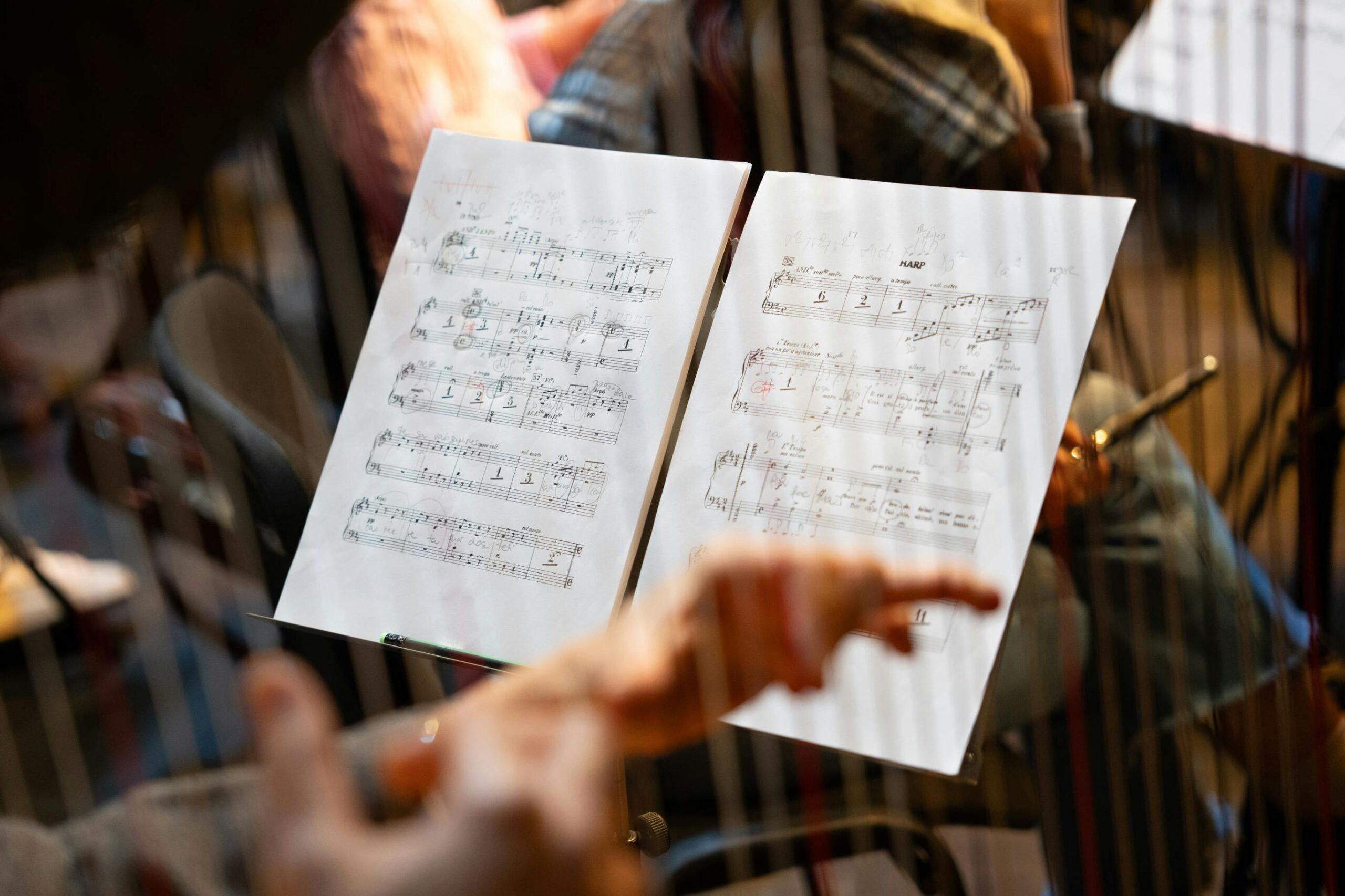
Transforming Analysis Into Artistic Excellence
The ultimate purpose of studying harmonic metrics isn’t to reduce music to numbers, but to deepen understanding of why certain musical choices resonate powerfully. Armed with knowledge about voice leading efficiency, spectral characteristics, tension indices, and harmonic diversity, musicians make more informed creative decisions. These metrics serve as diagnostic tools that reveal hidden patterns and suggest optimization strategies.
Regular harmonic analysis of one’s own work develops critical listening skills that transfer across all musical activities. Musicians who understand what makes harmony rich and stable can more effectively communicate with collaborators, troubleshoot compositional problems, and develop distinctive artistic voices grounded in technical mastery. The metrics become internalized, informing intuitive decisions during spontaneous creative moments.
The journey toward musical brilliance integrates technical knowledge with emotional authenticity. Harmonic richness and stability metrics illuminate one crucial dimension of musical excellence, complementing melodic, rhythmic, timbral, and structural considerations. By attending to these measurable qualities while maintaining artistic vision, musicians unlock their full creative potential and craft works that resonate across time and culture.