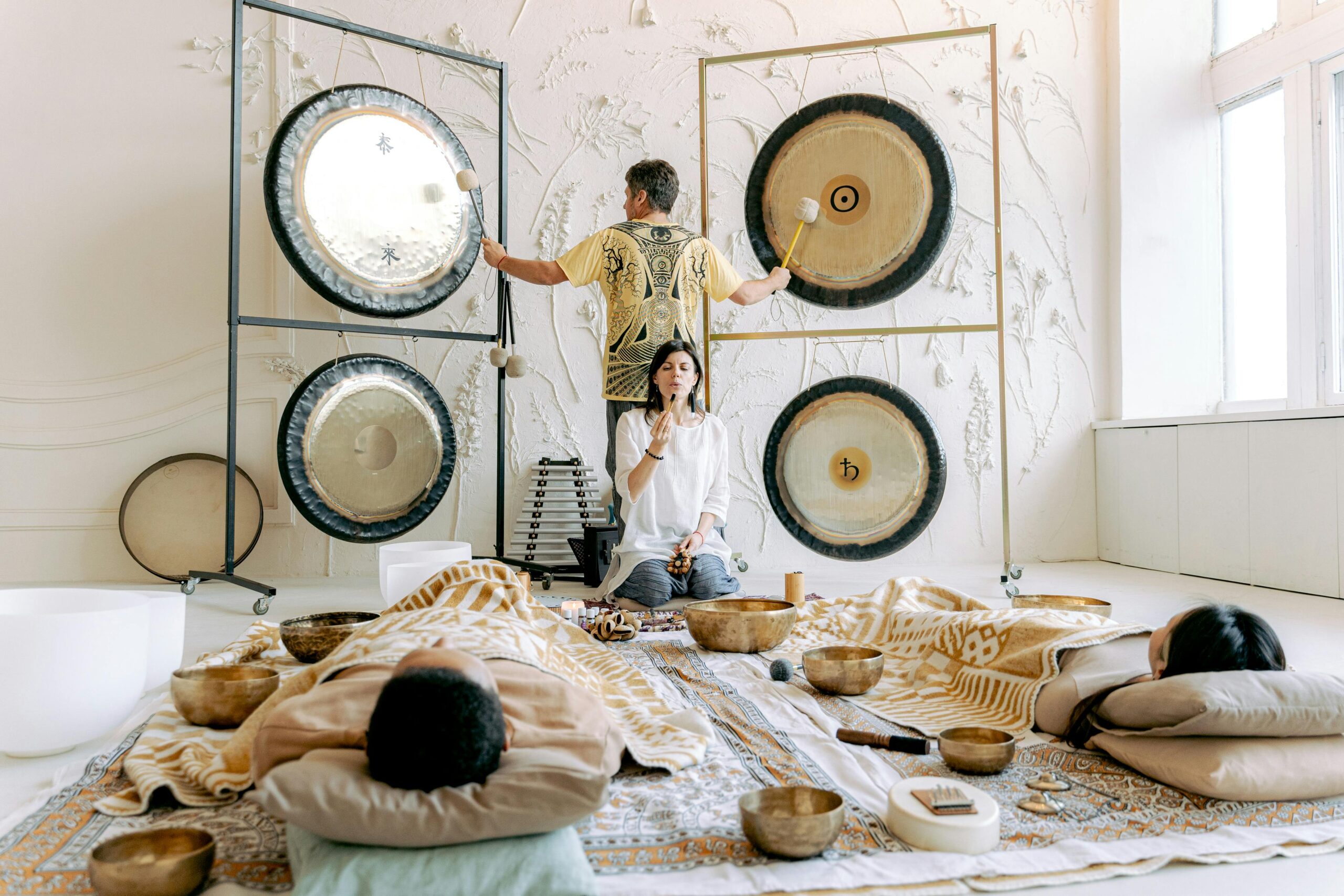
Music shapes our world in ways both visible and invisible, weaving through spaces and cultures to create unique soundscapes that define how we experience our surroundings.

🎵 The Invisible Architecture of Sound
Every environment possesses its own acoustic signature, a sonic fingerprint that influences how music is created, performed, and perceived. From the reverberant chambers of gothic cathedrals to the intimate corners of underground jazz clubs, the physical characteristics of a space fundamentally alter our musical experience. This relationship between sound and environment has fascinated musicians, architects, and acousticians for centuries, leading to innovations that continue to shape how we design spaces for musical expression.
The concept of harmonious habitats extends beyond mere acoustics. It encompasses the cultural, social, and psychological dimensions that make certain musical expressions feel naturally suited to specific environments. A street busker’s amplified guitar resonates differently in the urban canyon of skyscrapers than it would in an open park, not just physically but contextually. Understanding these nuances helps us appreciate why music evolves distinctly across different settings and communities.
Natural Environments as Musical Inspiration
Nature has always been humanity’s first concert hall. The rhythmic patterns of ocean waves, the complex polyrhythms of rainfall, and the melodic variations of birdsong have influenced countless compositions throughout history. Indigenous cultures worldwide have developed musical traditions that mirror and complement their natural surroundings, creating profound connections between landscape and soundscape.
In forest environments, musicians have long recognized the natural amphitheater effect created by dense foliage. Trees absorb certain frequencies while reflecting others, creating a natural equalization that emphasizes mid-range tones. This phenomenon explains why wooden instruments like flutes and string instruments feel particularly appropriate in woodland settings—they speak the same acoustic language as their environment.
Coastal Soundscapes and Maritime Music
Seaside environments present unique acoustic challenges and opportunities. The constant background noise of waves creates a natural drone, similar to the continuous notes found in bagpipe music or certain forms of traditional throat singing. Coastal communities worldwide have developed musical traditions that either work with or against this omnipresent sound, leading to distinctive vocal techniques and instrumental choices that can project over the ocean’s roar.
Sea shanties, for example, evolved not just as entertainment but as functional music designed to coordinate labor aboard ships. The call-and-response structure cut through wind and wave noise while the rhythmic patterns synchronized physical work. These songs demonstrate how environment directly shapes musical form and function.
Urban Acoustics: When Cities Sing 🏙️
Modern urban environments create some of the most complex acoustic scenarios ever encountered in human history. The cacophony of traffic, construction, conversations, and electronic sounds forms a dense sonic layer that musicians must navigate. Yet cities have also become breeding grounds for innovative musical expressions that emerge specifically from this acoustic chaos.
Hip-hop culture exemplifies urban musical adaptation. Born in the Bronx, this genre incorporated the sounds of the city itself—the rhythmic clatter of subway trains, the scratch of records manipulated like urban percussion, and vocal techniques that could project over street noise. The music didn’t just exist in the urban environment; it became a sonic representation of that environment.
Architectural Acoustics in Performance Spaces
Purpose-built performance venues represent humanity’s attempt to create ideal musical habitats. Concert halls like Vienna’s Musikverein or Boston’s Symphony Hall are studied worldwide for their near-perfect acoustic properties. These spaces achieve their renowned sound through careful consideration of dimensions, materials, and geometric proportions that create optimal reverberation times and frequency responses.
The reverb time in a space—how long sound persists after the source stops—profoundly affects musical interpretation. Classical music typically flourishes in spaces with reverberation times between 1.8 and 2.2 seconds, which allows individual notes to blend smoothly while maintaining clarity. Conversely, amplified rock music requires much shorter reverb times to prevent sonic mud, typically under one second.
| Environment Type | Ideal Reverb Time | Musical Genres |
|---|---|---|
| Concert Halls | 1.8-2.2 seconds | Classical, Orchestral |
| Jazz Clubs | 0.8-1.2 seconds | Jazz, Acoustic |
| Rock Venues | 0.6-1.0 seconds | Rock, Pop, Electronic |
| Cathedrals | 4-8 seconds | Choral, Organ |
Sacred Spaces and Spiritual Soundscapes
Religious architecture has always prioritized acoustic considerations, recognizing sound’s power to inspire spiritual experience. Gothic cathedrals with their soaring vaulted ceilings create reverb times that can exceed eight seconds, transforming simple chants into ethereal cascades of sound. This acoustic property influenced the development of polyphonic music, as composers learned to work with rather than against the space’s natural characteristics.
Islamic mosques employ different acoustic principles, often featuring geometric tile work that diffuses sound evenly throughout prayer halls. This ensures that the imam’s voice reaches all worshippers with equal clarity, embodying principles of spiritual equality in architectural form. Similarly, Buddhist temples in Asia often incorporate wooden construction that naturally warms sound, complementing the meditative qualities of chanting and bell tones.
The Psychology of Musical Environments 🧠
Our perception of music changes dramatically based on environmental context. The same piece of music heard in a quiet bedroom, a bustling cafe, or during a commute creates vastly different emotional and cognitive responses. This phenomenon relates to how our brains process foreground and background information, constantly adjusting our attention based on environmental demands.
Research in environmental psychology has demonstrated that people prefer different musical characteristics depending on their surroundings. In work environments, music with moderate complexity and minimal lyrics tends to enhance productivity without causing distraction. Retail spaces often employ carefully curated playlists designed to influence shopping behavior, adjusting tempo and genre based on time of day and target demographics.
Therapeutic Landscapes Through Sound
Healthcare facilities increasingly recognize music’s role in creating healing environments. Hospital designs now incorporate considerations for acoustic privacy, reduced noise pollution, and integration of soothing soundscapes. Studies show that patients exposed to appropriate musical environments experience reduced anxiety, lower pain perception, and faster recovery times compared to those in purely clinical sonic settings.
Biophilic design principles suggest that incorporating natural sounds—flowing water, rustling leaves, bird songs—into built environments reduces stress and promotes wellbeing. This has led to architectural innovations that blur boundaries between indoor and outdoor spaces, creating harmonious transitions between human-made and natural soundscapes.
Technology’s Role in Shaping Musical Habitats
Modern technology has revolutionized our relationship with musical environments. Digital audio workstations allow producers to simulate any acoustic space imaginable, from cathedral reverb to intimate room acoustics. Musicians can now create and manipulate sonic environments with unprecedented precision, building virtual habitats that would be impossible to achieve physically.
Spatial audio technologies take this further by creating three-dimensional soundscapes that place listeners within immersive musical environments. Formats like Dolby Atmos and binaural recording techniques recreate the acoustic properties of specific spaces, allowing listeners to experience the ambiance of famous venues or entirely imaginary sonic architectures through headphones.
Mobile Music and Personalized Soundscapes 🎧
Smartphones and portable music players have transformed how we engage with musical environments. We now carry personal soundtracks that overlay and interact with our physical surroundings, creating hybrid acoustic experiences unique to modern life. This technology allows us to curate our sonic environment, selecting music that either complements or contrasts with our immediate context.
Music streaming platforms use sophisticated algorithms to recommend music based not just on taste but on contextual factors like time of day, location, and activity. These systems learn how users prefer different musical environments for working, exercising, relaxing, or socializing, effectively becoming environmental sound designers for millions of people simultaneously.
Cultural Dimensions of Musical Spaces
Different cultures develop distinct relationships between music and environment. In West African traditions, music is deeply integrated with outdoor communal spaces, with instruments and vocal techniques developed for projection in open-air gatherings. The talking drum, for instance, achieves remarkable volume and tonal variation specifically to communicate across distances in village settings.
Japanese aesthetic principles emphasize ma—the meaningful space between sounds—which reflects broader cultural values about negative space and silence. Traditional Japanese music evolved in architectural contexts featuring paper walls and wooden construction, creating intimate acoustic environments where subtle timbral variations become profoundly expressive.
Festival Environments and Collective Experience
Music festivals create temporary sonic habitats that blend natural and artificial elements. From Glastonbury’s muddy fields to Coachella’s desert setting, these events demonstrate how environment profoundly influences musical experience. Festival designers carefully consider sightlines, sound bleed between stages, and how landscape features can enhance or challenge acoustic delivery.
The outdoor festival environment encourages different musical approaches than indoor venues. Artists must account for wind, temperature variations, and the lack of reflective surfaces that provide acoustic feedback in enclosed spaces. This has led to specialized sound reinforcement techniques and performance adaptations that treat the open air as an instrument itself.
Designing Tomorrow’s Musical Habitats 🔮
As we look toward the future, architects and urban planners increasingly recognize the importance of acoustic design in creating livable, vibrant communities. Cities are implementing “sound planning” initiatives that map existing soundscapes and design interventions to reduce noise pollution while preserving culturally significant sonic characteristics.
Some forward-thinking projects integrate musical functionality directly into architecture. Public spaces featuring interactive sound sculptures, buildings with facades that generate tones in the wind, and parks designed as acoustic gardens all represent innovative approaches to creating harmonious urban habitats where music and environment merge seamlessly.
Climate Adaptation and Acoustic Futures
Climate change poses new challenges and opportunities for musical environments. Rising temperatures affect how instruments behave, changing tuning stability and tonal characteristics. Materials traditionally used in instrument construction may become scarce, driving innovation in sustainable alternatives. Meanwhile, new performance spaces must consider climate resilience, potentially leading to architectural forms that create novel acoustic properties.
Virtual and augmented reality technologies promise to expand our concept of musical habitat beyond physical constraints. Imagine concerts where each listener experiences a unique acoustic environment tailored to their preferences, or collaborative performances where musicians in different physical locations share a coherent virtual acoustic space. These technologies could democratize access to ideal musical environments while raising questions about authenticity and shared experience.

Cultivating Acoustic Awareness in Daily Life
Developing sensitivity to the acoustic properties of our surroundings enriches our musical experience and overall quality of life. Simple practices like mindful listening—paying attention to the natural reverb of different rooms, noticing how music changes character in various settings—deepen our appreciation for the complex relationship between sound and space.
Musicians can benefit tremendously from understanding their performance environment. Professional artists routinely conduct sound checks that map a venue’s acoustic characteristics, adjusting their technique and equipment accordingly. Amateur musicians can apply similar principles, considering how their practice space’s acoustics affect their sound and making adjustments to create more harmonious habitats for musical development.
The intersection of music and environment reveals fundamental truths about human creativity and adaptation. We don’t simply place music into spaces; rather, music and space co-create each other in an ongoing dialogue. Whether in natural landscapes, urban jungles, or purpose-built performance halls, the environments we inhabit shape the music we make, which in turn influences how we design and experience those spaces.
By recognizing this reciprocal relationship, we gain tools to create more harmonious habitats—spaces where musical expression can flourish and where sound contributes positively to our wellbeing. The future of musical environments lies not in perfecting acoustic isolation but in thoughtfully integrating music into the rich tapestry of sounds that define our daily lives, creating soundscapes that resonate with both individual and collective aspirations.